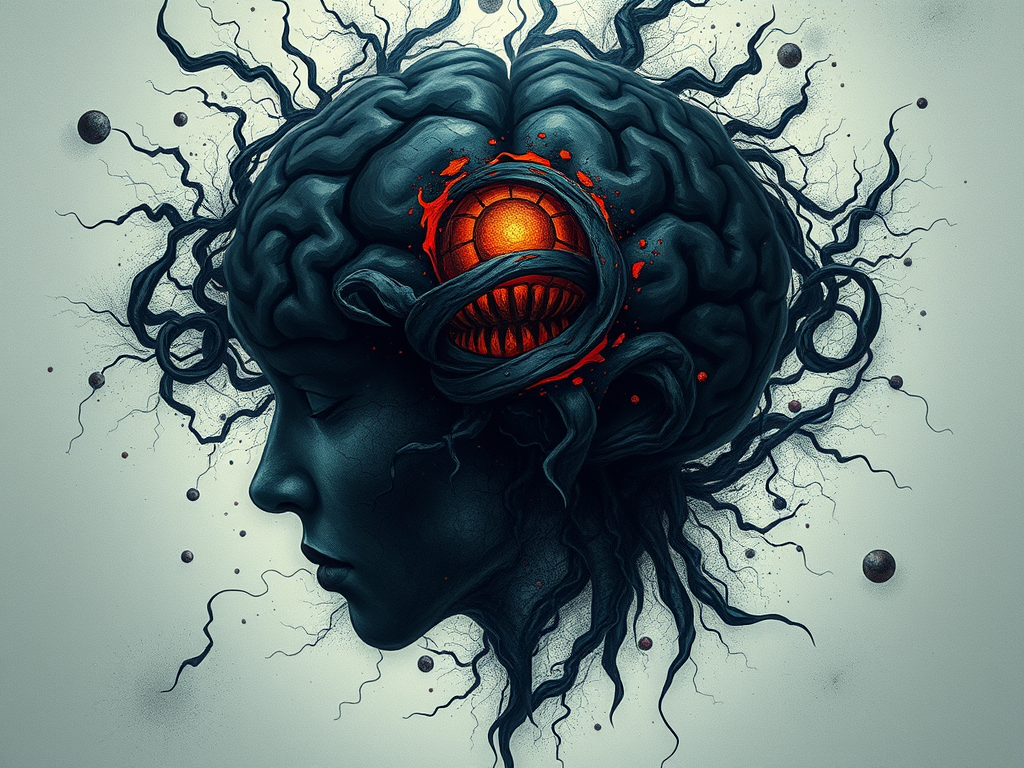
In New Zealand, the term “anxiety” is often used as a catch-all, but for survivors of family violence, it is usually a very specific physiological response to trauma. It isn’t a “weakness” or a “disorder”—it is your body’s safety system that has been stuck in the “ON” position for too long.
Here is everything you need to know about understanding and managing anxiety in the context of family harm.
1. It’s Not Just “Stress”—It’s Hyper-Vigilance
When you live with an abuser, your brain becomes an expert at predicting danger. This is called Hyper-vigilance.
- The “Scanning” Habit: You may find yourself constantly scanning rooms, checking exits, or analyzing the tone of people’s voices.
- The “Startle” Response: You might jump at loud noises, a door closing, or someone standing behind you. This is your amygdala (the brain’s alarm) firing to keep you alive.
- The Mind Games: Abuse often involves “gaslighting,” which creates a specific type of anxiety where you stop trusting your own memory or reality.
2. Common Physical Symptoms
Anxiety after family violence often shows up in the body before the mind. In NZ health settings, this is sometimes called Somatic distress:
- The “Tight Chest”: Feeling like you can’t get a full breath or having a heavy weight on your chest.
- Digestive Issues: “Butterflies,” nausea, or irritable bowel symptoms (the gut and brain are closely linked in trauma).
- The “Fog”: Difficulty concentrating, forgetfulness, or feeling “spaced out” (dissociation).
- Sleep Disturbance: Trouble falling asleep because your brain feels it must stay “on guard” during the night.
3. Understanding “Triggers” in Aotearoa
A trigger is a sensory reminder that tricks your brain into thinking the abuse is happening right now.
- Sensory Triggers: A certain smell (like a specific cologne or alcohol), a song, or even the way the light looks at a certain time of day.
- Environmental Triggers: Seeing a car similar to the abuser’s, or passing a street where an incident occurred.
- The “Bindi” (Safety Alarm) Anxiety: Ironically, even the tools meant to help (like security cameras or alarms) can sometimes trigger anxiety because they remind you that you need protection.
4. How to Quiet the “Internal Alarm” (Tools)
Since this anxiety is physical, you have to talk to your body first, not just your head.
| Technique | How it Works |
| Box Breathing | Inhale for 4, hold for 4, exhale for 4, hold for 4. This tells your nervous system: “There is no tiger chasing us.” |
| The 5-4-3-2-1 Method | Name 5 things you see, 4 you can touch, 3 you hear, 2 you smell, 1 you taste. This pulls you out of a flashback and back to the present. |
| Cold Water Shock | Splashing ice-cold water on your face or holding an ice cube. This “resets” the vagus nerve and can stop a panic attack in its tracks. |
| Weight & Pressure | Using a weighted blanket or a heavy cushion on your lap. This provides “proprioceptive input” that helps your body feel grounded and safe. |
5. Where to Get Free Support in NZ
You do not have to pay to get help for trauma-related anxiety.
- 1737 (Need to Talk?): Free call or text anytime. It is a 24/7 service with trained counselors who understand anxiety.
- 0800 ANXIETY (0800 269 4389): A specialized helpline for all forms of anxiety.
- ACC Sensitive Claims: If the violence involved sexual harm, you are entitled to lifetime free therapy through ACC. You can find a provider at findsupport.co.nz.
- Your GP: In NZ, many GPs can offer “Brief Intervention” sessions (usually 4-6 free counseling sessions) for anxiety related to family harm.
A Note on “The Fog”: If you feel like you are “going crazy” or can’t remember things, know that this is a standard biological reaction to prolonged stress. As your environment becomes safer (through tools like Whānau Protect or PSOs), your brain will slowly begin to “off-load” this anxiety and your memory will return.
Fear of the Future
When you have lived in a state of “crisis mode,” your brain is trained to view the future not as a land of opportunity, but as a series of potential ambushes. This specific type of anxiety—Fear of the Future—is a natural byproduct of having your predictability stolen from you for years.
In New Zealand, many survivors call this “waiting for the other shoe to drop.” Here is how to understand and navigate that fear.
1. The “Safety Paradox”
Paradoxically, anxiety often increases the moment you are actually safe (e.g., when a PSO is served or you move to a new house).
- Why it happens: When you were in the “minefield,” your adrenaline kept you numb and moving. Now that the immediate threat is removed, your nervous system finally has the space to feel the “backlog” of fear it was suppressed.
- The Future Fear: You might feel like this peace is “too good to be true” or that the abuser is just “planning something bigger.”
2. Fear of the “System” (Legal & Financial Anxiety)
In NZ, the fear of the future is often tied to the “long game” of the legal system.
- Family Court Dread: Anxiety about upcoming hearings for Protection Orders or Parenting Orders.
- Economic Fear: “How will I survive on my own?” or “Will they use Child Support to control me?”
- The Reality: These are valid concerns, but anxiety makes them feel unbeatable. Remember, NZ has specific protections like the Domestic Violence Leave (10 days paid leave) and Work and Income (WINZ) “Emergency Housing” and “Transition to Safety” grants to help bridge the future gap.
3. Cognitive Distortions: The “Crystal Ball” Trap
Anxiety tricks you into “Catastrophizing”—predicting the absolute worst-case scenario for the next 5 years.
- The Distortion: “I’ll never be safe, they will find me eventually, and I’ll be alone forever.”
- The Truth: You only have to manage the future in tiny increments. The 10-year future doesn’t exist yet; only the next 10 minutes do.
4. Tools to Manage “Future-Dread”
| Tool | How to use it |
| The “What If” Flip | When you think: “What if they show up?” force yourself to also ask: “What if they don’t? What will I do with that peaceful afternoon?” |
| Micro-Goals | Don’t plan the year. Plan the next 4 hours. Once those are done, plan the next 4. This shrinks the future down to a size you can handle. |
| The “Evidence Folder” | Keep a notebook of “Small Wins.” (e.g., “Today I drank tea in peace,” “The locks held,” “I handled the WINZ call.”) Use this as evidence that you are capable of handling whatever comes. |
| Control the Controllables | You can’t control the abuser’s future choices, but you can control your phone number, your privacy settings, and your door locks. |
5. Rebuilding “Trust in Tomorrow”
In Aotearoa, we talk about Tūmanako (Hope). Hope isn’t just a feeling; it’s a discipline.
- Seek “Lived Experience”: Talk to people further down the track (through support groups like Women’s Refuge or Shine). Seeing someone 2 years out from abuse, living a boring, peaceful life, is the best “cure” for future-anxiety.
- Professional Support: Ask your GP for a referral to a psychologist who uses CBT (Cognitive Behavioural Therapy) or ACT (Acceptance and Commitment Therapy). These are highly effective for breaking the cycle of future-focused worry.
6. A Message to Your Future Self
The person you will be in one year is already stronger than the person you are today. You are currently building the muscles of independence. Every day that you survive this anxiety, you are proving that you can handle the future.
Note: If your fear of the future leads to thoughts of hopelessness or self-harm, please call the NZ Suicide Crisis Helpline: 0508 828 865 or text 1737. You aren’t “crazy,” you’re just exhausted, and help is available.
 Staying Safe and Sane