
Disrupting Social Entrapment: The “Boring Barrier” & The Kōhatu
We do not destroy the social fabric; we surgically remove the threads of entrapment.
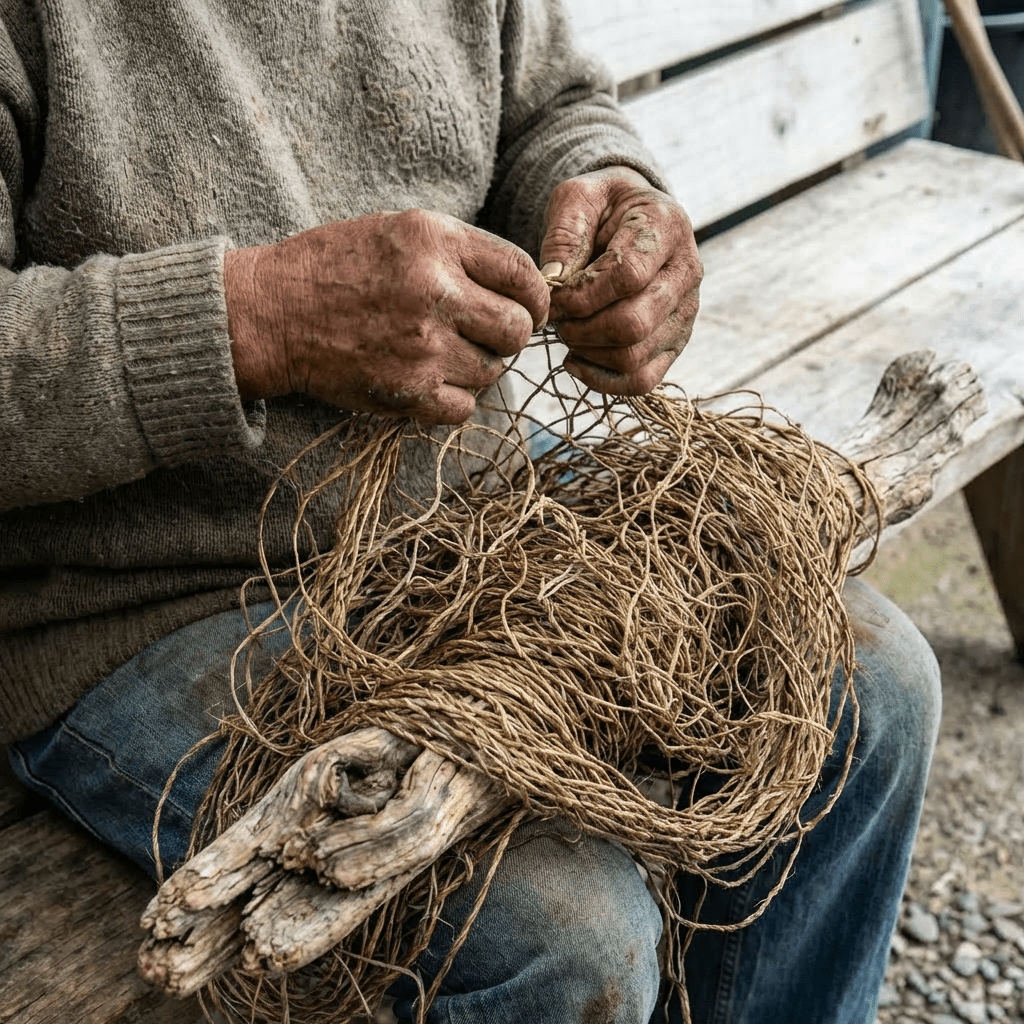
Hine-te-iwaiwa teaches us that a Korowai is only as strong as its foundation. In cases of family and sexual harm, the perpetrator creates a tangled, distorted weave. They use shared whānau, mutual friends, and community circles to “mesh” the survivor into silence.
The survivor often stays in this mesh not out of choice, but because the Social Cost—the fear of “breaking the weave” of the whānau—feels too high. They stay to protect the collective peace, even while their own Mana is being diminished.
The Kaitiaki as the Master Unpicker
Your role is to surgically unpick these tangled threads. You provide a Third Way between staying silent and leaving the whānau entirely. You are there to expand the Vā (the sacred space) between the survivor and the harm.
- Physical Buffer: Occupying the space so the survivor is never cornered.
- Social Shield: Interrupting “heavy” or targeted questioning from the perpetrator or “Flying Monkeys” (those who enable the harm).
- The Breath of Space: Giving the survivor the “room” to be quiet or to leave the room without feeling they have “failed” the group.
The Observer’s Trap: Triangulation
Perpetrators often try to pull the Kaitiaki into the “Mesh.” They may approach you to complain about the survivor, acting as if you are “on their side.” This is an attempt to isolate the survivor further by making them look like the “difficult” one.
The Kaitiaki Action: The Kōhatu (Stone) Response
In Te Ao Māori, the Kōhatu is an anchor. When the perpetrator tries to pull you into the drama, you remain a Stone—steady, unmoving, and unreactive.
- The Script: “I’m just here to catch up with the whānau today, not to get into the middle of anything. Excuse me, I need to check on the hāngī/kids.”
The “Boring Barrier”: Low-Energy Engagement
The best way to de-escalate a perpetrator is to be unproductive. If you give them a “show” (anger, debating, defending), you are feeding the conflict.
- The Strategy: Be so boring that the perpetrator loses interest. Use short, factual, “dead-end” sentences.
- The Goal: Make the environment “cold” for the perpetrator but “warm” for the survivor.
- Perpetrator: “She’s being very sensitive today, isn’t she?”
- Kaitiaki: “It’s a long day for everyone. Have you seen the new carvings?”
Managing “The Scene”: Protecting the Mana
If the perpetrator tries to create a public scene, the Kaitiaki’s job is to de-escalate the space, not the person.
- The Rule: Focus entirely on the survivor’s physical exit.
- The Tactical Move: Do not look at the perpetrator. Do not shout back. Your silence is your Mana Motuhake. It signals to the whānau that you are the Steady Anchor, and the perpetrator is the source of the storm.
Founder’s Reflection: The Strength of the Unseen Thread
From Te Tai Tokerau to Auckland, I’ve seen that the ‘Mesh’ is what keeps our people small. When you act as a Kōhatu, you are telling the survivor: ‘I see the tangle, and I’m holding the line for you.’ You are breaking the entrapment by simply refusing to be woven into it.” — Lee-Anne
 Staying Safe and Sane