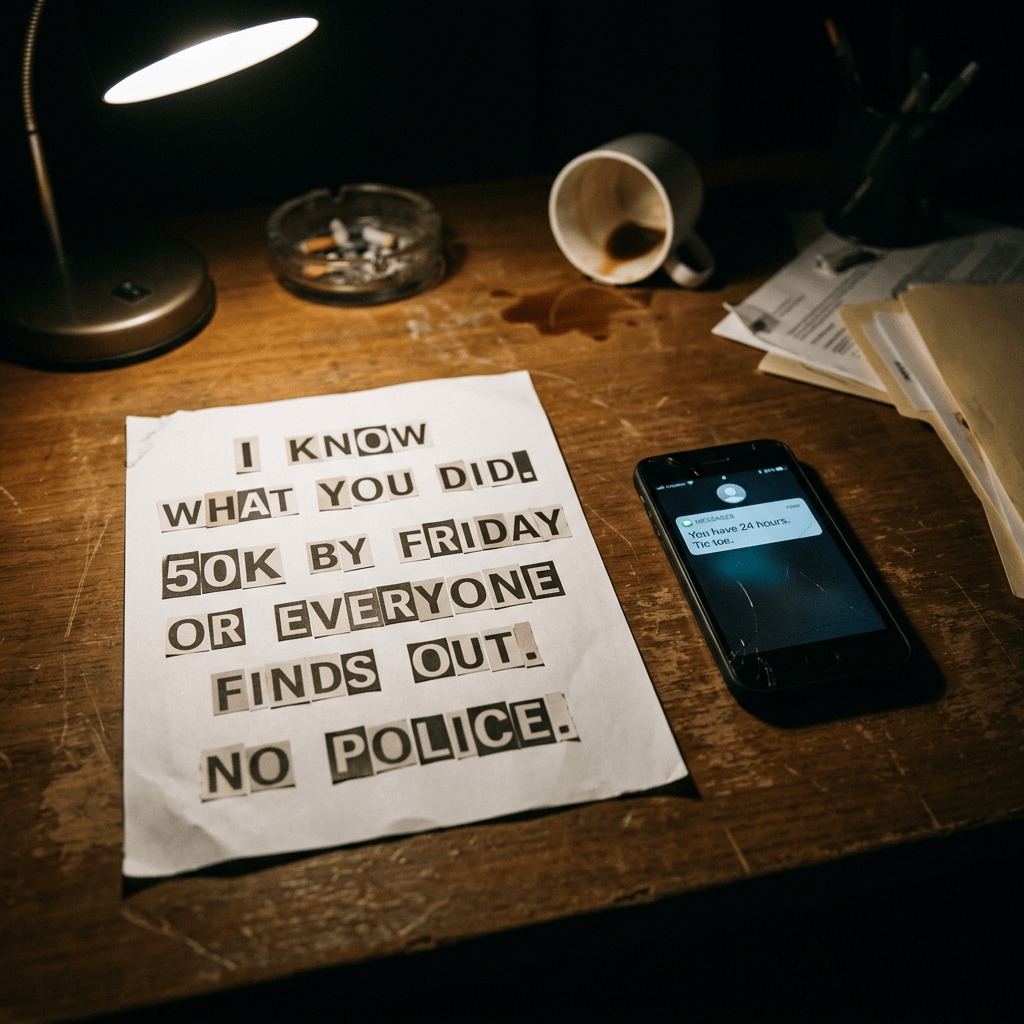
This is a sensitive and critical topic. In New Zealand, blackmail and sexual extortion (often called “sextortion”) are serious criminal offenses with specific legal protections and support pathways.
The Legal Definition
Under Section 237 of the Crimes Act 1961, blackmail occurs when someone makes a threat (express or implied) to:
- Make an accusation against any person (living or dead).
- Disclose information about any person.
- Cause serious damage to property or endanger safety.
The Intent: The person must intend to make the victim act according to their will and to obtain a benefit or cause a loss. In New Zealand, blackmail carries a maximum penalty of 14 years imprisonment.
Sexual Extortion (Sextortion)
Sextortion is a form of blackmail where someone threatens to share intimate images or videos of you unless you provide more sexual content, money, or other favors. This also falls under the Harmful Digital Communications Act (HDCA) 2015, which makes it illegal to share (or threaten to share) private, intimate recordings without consent.
Immediate Steps for Victims
If you are being targeted, experts in NZ (like Netsafe and the Police) recommend the following:
- Stop Communication: Do not pay, do not send more images, and do not engage further. Paying often leads to more demands rather than the deletion of the content.
- Preserve Evidence: Take screenshots of all messages, threats, and the offender’s profile. Do not delete the conversation, as this is vital for a police investigation.
- Secure Your Accounts: Change your passwords and update your privacy settings on social media.
- Report the Content: Most platforms (Facebook, Instagram, Snapchat, etc.) have specific tools to report extortion and “revenge porn” to have the content blocked or removed.
Where to Get Help in New Zealand
1. Netsafe (Online Safety)
Netsafe is New Zealand’s independent agency for online safety. They can help you get harmful content removed and provide advice on managing the situation.
- Website: netsafe.org.nz
- Phone: 0508 NETSAFE (0508 638 723)
- Text: Text ‘Netsafe’ to 4282
2. New Zealand Police
Blackmail is a crime. You can report it to the police, even if the offender is overseas.
- Emergency: Call 111 if you are in immediate danger.
- Non-Emergency: Call 105 or report online at 105.police.govt.nz.
3. Safe to Talk (Sexual Harm Helpline)
A confidential, 24/7 service for anyone experiencing sexual harm.
- Phone: 0800 044 334
- Text: 4334
- Website: safetotalk.nz
4. Victim Support
They provide emotional and practical support to help you navigate the justice system.
- Phone: 0800 VICTIM (0800 842 846)
- Website: victimsupport.org.nz
A Note for Victims: Being targeted for extortion is an act of predatory crime, not a reflection of your character. New Zealand law is designed to protect your privacy and safety throughout the reporting process.
Beyond the immediate reporting steps, there are critical legal protections and procedural rights in New Zealand designed specifically to shield victims from further harm or public exposure.
1. Legal Protections & Privacy
Automatic & Requested Name Suppression
In New Zealand, the justice system prioritizes the privacy of victims in cases of sexual harm or extortion:
- Automatic Suppression: If the case involves sexual offending, victim names are often automatically suppressed.
- Extortion-Specific Orders: Under the Criminal Procedure Act 2011, a judge can forbid the publication of a victim’s name or identifying details specifically to protect their reputation or to prevent “undue hardship.”
- Open Justice Exceptions: While NZ courts generally operate on a principle of “open justice,” extortion is one of the few areas where the court can clear the gallery or allow a victim to give evidence behind a screen or via video link to ensure they feel safe.
The “Safe Harbour” & Takedowns
Under the Harmful Digital Communications Act (HDCA), victims have the right to a fast-track takedown process:
- 48-Hour Takedown: If harmful content is posted on a site hosted in NZ, the host must follow a specific process to remove the content within 48 hours once notified, provided the uploader does not validly object.
- Civil Orders: Even if the police do not prosecute, you can apply to the District Court for a civil order to stop the person from continuing the harassment or to force the removal of content.
2. Your Rights with the Police
When you report blackmail or sextortion to the NZ Police, you are protected by the Victims’ Code. You have the right to:
- Be Informed: You can request to be updated on the progress of the investigation and whether charges are laid.
- A Support Person: You are entitled to have a support person (friend, family, or professional advocate) with you when making a statement.
- Property Return: If the police seize your phone or computer as evidence, they are required to return it as soon as it is no longer needed for the case.
- Financial Assistance: In some cases, you may be eligible for assistance via ACC if the extortion resulted in mental injury (sexual harm is a covered category).
3. Specialized Technical Tools
NZ agencies often recommend these international tools which work in tandem with NZ law:
- StopNCII.org: If you are over 18, this tool allows you to “hash” (create a digital fingerprint of) an intimate image so that participating platforms (Facebook, Instagram, etc.) can proactively block it from being uploaded.
- Take It Down: A similar service provided by the National Center for Missing & Exploited Children for those who were under 18 when the image was created.
4. Practical Realities for NZ Victims
- The “Overseas” Factor: Many sextortionists operate from outside New Zealand. While NZ Police may not be able to arrest someone in another country, reporting still helps. Netsafe has relationships with international social media companies and can often get content removed globally even if the offender is never caught.
- No Self-Incrimination: Victims often fear they will be in trouble for taking or sending the original image. In New Zealand, the focus of the law is on the extortionist, not the victim. Sending an intimate image of yourself is not a crime; threatening to share it is.
Summary of Victim Rights
| Right | What it means |
| Privacy | You can ask the court to keep your name out of the media. |
| Support | You have access to free, 24/7 helplines like Safe to Talk. |
| Action | You can pursue a criminal case (Police) or a civil case (District Court). |
| Control | You have the right to say “no” to further demands without legal penalty. |
The threat of AI-generated pornography (often called “deepfakes”) is a rapidly evolving area of digital harm. In New Zealand, the law has been updated to reflect that it does not matter if the image is “real” or not—the harm to the victim is the same.
Here is the essential information for victims regarding AI-generated extortion.
1. The Legal Status of AI Pornography in NZ
Victims often worry that because the image isn’t “real,” the police cannot help. This is incorrect.
- The Harmful Digital Communications Act (HDCA): Under the HDCA, it is an offense to post or threaten to post digital communication that causes “serious emotional distress.” New Zealand courts and Netsafe treat AI-generated intimate images (non-consensual deepfakes) as a form of image-based sexual abuse.
- The Crimes Act 1961: Recent legislative updates and the Deepfake Digital Harm and Exploitation Bill (introduced in 2025/2026) have moved to explicitly include “digitally fabricated” or “synthesized” recordings under the definition of intimate visual recordings.
- The Classification Office: In NZ, AI-generated content is treated the same as real content. If the content depicts something illegal (like sexual violence), it can be classified as “objectionable,” making it illegal to create, possess, or share.
2. Why AI Threats are a “Bluff”
While AI tools can create realistic images, blackmailers often use the fear of what they could create to control you.
- No Original Material Needed: They may claim they have “uncovered” something or can make a “perfect” copy of you using just a profile picture.
- The Power of Disclosure: Remind victims that in the age of AI, there is a growing public awareness that these images are fakes. Many victims find that by being open with their circle (“Someone is trying to harass me with fake AI images”), the blackmailer’s power is instantly neutralized.
3. Critical Actions for Deepfake Threats
Don’t Engage or Pay
Paying a deepfake extortionist is particularly dangerous. Because the images are digital and can be generated infinitely, paying once does not stop them from demanding more to “delete” the AI model or the images.
Use the “StopNCII” Tool
StopNCII.org (Stop Non-Consensual Intimate Image Abuse) is a world-leading tool that works in NZ.
- It allows you to create a digital fingerprint (a “hash”) of your own photos or the threatened AI images.
- Participating companies (Meta, TikTok, etc.) use this hash to automatically detect and block those images from being uploaded to their platforms.
Report to the NZ Classification Office
If the AI-generated content is particularly extreme, you can report it to the Internal Affairs (DIA) Censorship Team. They have the power to officially classify material as illegal, which makes it much easier for platforms to remove it globally.
4. Communicating with Family & Friends
If the offender threatens to send these fakes to your circle, the advice for your manual should be clear: Control the Narrative.
Suggested Script for Victims:
“I’m letting you know that I’m being targeted by an online extortionist. They are threatening to send out fake, AI-generated images that look like me to my friends and family. If you receive anything suspicious or explicit via message or email, please don’t open it—it is a scam and a fake. Please report the account and let me know.”
Summary: AI-Specific Protections
| Victim Concern | New Zealand Reality |
| “It’s not a real photo, so it’s not a crime.” | False. NZ law focuses on the harm and the threat, regardless of how the image was made. |
| “If they send it, everyone will believe it’s me.” | Unlikely. People are increasingly aware of deepfakes. Proactive warning usually gains you support. |
| “I can’t get it taken down because it’s AI.” | False. Netsafe and the HDCA provide pathways for removing synthesized or altered intimate content. |
Key Message: The creation of deepfake pornography without consent is a form of digital violence. New Zealand authorities treat these “fake” images with the same legal weight as “real” ones.
When blackmailers or sextortionists shift their focus from the victim to their family and friends, the situation moves from a privacy concern to a direct safety threat. In New Zealand, this triggers specific legal protections and tactical advice.
Here is what victims need to know when their inner circle is targeted.
1. Legal Escalation: Threats to Kill or Harm
Under the Crimes Act 1961, threats directed at third parties are treated with extreme seriousness:
- Threatening to Kill or Do GBH: Threatening to kill or cause “grievous bodily harm” to any person (not just the victim) is a crime punishable by up to 7 years in prison.
- Crimes Against the Family: If the threat comes from someone you have a relationship with (including an ex-partner), it is classified as Family Violence. This allows you to apply for a Protection Order that can explicitly include your children or other family members as “protected persons.”
2. Tactical Communication: “The Outreach Warning”
If you believe the offender has the contact details of your friends or family, Netsafe and the NZ Police often recommend a proactive “pre-emptive strike” to take the power away from the blackmailer:
- Warn your circle: You do not have to give every detail. A simple message can suffice: “Someone is harassing me and may try to contact my friends with fake or private info. If you get a message from an unknown person about me, please don’t open it, block them immediately, and let me know.”
- Why this works: Blackmailers rely on the “element of surprise” and your shame. By warning your friends, you ruin the offender’s leverage. Most people in NZ are incredibly supportive once they realize a friend is being targeted by a predator.
3. The “Silent 111” (Press 55)
If you believe a threat against a family member’s physical safety is imminent and you cannot speak freely:
- Call 111.
- If you are on a mobile and it’s not safe to speak, press 55 when prompted. This tells the operator that it is a genuine emergency and you need police but cannot talk.
- The police can then use GPS data to dispatch help to your location.
4. Digital Privacy for Others
- Lock down “Friends Lists”: On platforms like Facebook, many offenders scrape your “Friends” list to find targets. Set your friends list to “Only Me” immediately.
- Advise family on privacy: Ask family members to set their own accounts to private. This prevents the offender from using their photos or personal info as additional leverage against you.
5. Support for Whānau
The impact of extortion rarely stays with just one person. In NZ, support services extend to the victim’s family:
- Victim Support (0800 842 846): They provide “Manaaki Tāngata”—support for victims, their whānau, and witnesses. They can help family members deal with the anxiety and trauma of being threatened.
- Safe to Talk: If the threats involve sexual harm or the release of intimate images of family members, this service provides 24/7 confidential support for everyone affected.
Key Summary
Important: If a blackmailer says “I will hurt your [child/partner/parent],” stop all contact and call the Police on 105 (or 111 if it feels urgent). Do not negotiate. Negotiating with a person making violent threats rarely stops the behavior; it usually only increases the demands.
 Staying Safe and Sane